
"Arabica growing conditions"
2000 article(s) found

How to grow high-quality coffee bean seeds? What are the planting conditions that affect the growth of coffee beans?
Professional coffee knowledge exchange more coffee bean information please pay attention to the coffee workshop (Wechat official account cafe_style) how to grow high-quality coffee bean seeds? What are the planting conditions that affect the growth of coffee beans? Coffee beans are generally graded according to their size, defect rate and altitude. The size and defect rate of raw beans are easy to understand, and many people do not quite understand why some producing areas
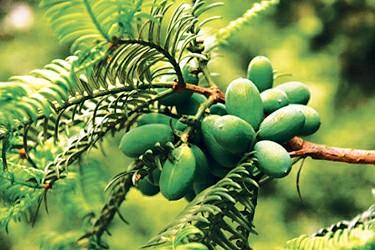
The planting conditions of coffee trees what kind of geographical environment is conducive to coffee planting and the introduction of coffee trees
Coffee tree coffee (Xoffea arabica Linn) coffee is a perennial evergreen shrub or small tree of Rubiaceae. It is a horticultural perennial cash crop with the characteristics of fast growth, high yield, high value and wide market. Wild coffee trees can grow to 5 to 10 meters high, but coffee trees planted on manors are often cut to less than 2 meters in order to increase fruit and facilitate harvesting.

The types and characteristics of coffee trees how many kinds of coffee trees are there and what are the most common coffee trees
Professional coffee knowledge exchange more coffee bean information Please pay attention to the coffee workshop (Wechat official account cafe_style) what are the conditions for growing coffee trees? The origin of the coffee tree is Ethiopia in Africa. In botany, the coffee tree belongs to the evergreen tree of the subgenus Rubiaceae, and coffee beans, commonly known as coffee beans, are the seeds of the fruit of the coffee tree, just because they are shaped like

What conditions do coffee trees need to meet to grow well? How to plant coffee trees?
Professional coffee knowledge exchange more coffee bean information please follow the coffee workshop (Wechat official account cafe_style) what conditions do coffee trees need to meet to grow well? How to plant coffee trees? The development of rainfall coffee needs sufficient moisture, the annual rainfall should be at least 1000 mm, and the maximum should not exceed 3000 mm. The rainfall should not be excessive or moderate, if the sauce is too much for a while.

Which province in China is suitable for growing coffee beans-- introduction to the environmental conditions of planting
Which province in China is suitable for growing coffee beans-- introduction to the planting environment. At present, Yunnan coffee is mainly distributed in 11 prefectures and cities, such as Baoshan, Simao, Yuxi and Dehong. Among them, the quality of coffee in Baoshan and Simao area is the best. Lujiangba, a dry and hot valley, is a tropical treasure house in Baoshan. The average temperature in the dam is 21.5℃, the highest is 40.4 ℃, and there is almost no frost all the year round. The small grains of coffee cultivated here
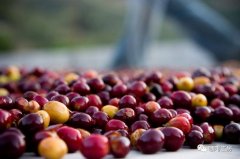
What's the difference between Yunnan coffee? What are the characteristics of small coffee?
Professional baristas Please follow the Coffee Workshop (Wechat official account cafe_style) Yunnan small grain coffee is relative to Vietnam's medium grain coffee, which is due to different varieties. The varieties grown in Yunnan are Arabica species, whose granules are smaller than those of Robusta coffee grown in Vietnam, so they are called small grains. As far as climatic conditions are concerned, the sunshine in southern Yunnan is long.
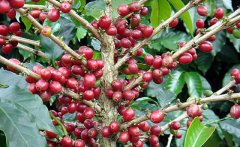
Fine coffee Arabica grows coffee beans
Arabica beans account for 70% of the world's output. The world-famous Blue Mountain Coffee and Mocha Coffee are almost all Arabica species. The other is the Robasta species, which is native to the Congo in Africa and accounts for about 20% to 30% of the world's output. Different varieties of coffee beans have different tastes, but even the same variety of coffee trees, due to different
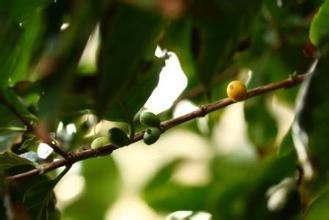
Coffee growing environment affects coffee growing environment and coffee quality Suitable soil and conditions
Coffee originated in tropical Africa, the origin of small species is the tropical plateau of Ethiopia, between 900 and 1800 meters above sea level, with an average annual temperature of 19. C. The medium-grained species originated in the tropical rain forest area of Congo, below 900 meters above sea level, with an annual average temperature of 21~26. C。They are native to shady or semi-shady forests and river valleys, so coffee needs calm wind, warm and humid

Cote d'Ivoire Coffee Growing Conditions Environment Flavor Taste Quality Introduction
Cote d'Ivoire coffee growing conditions Environment Flavor Taste Quality Introduction to the region Cote d'Ivoire (Cte d'Ivoire) has never produced the best quality coffee, and the coffee produced is rarely from Arabica coffee trees. In the early 1980s, it was the third largest coffee producer in the world, producing 5 million bags a year. Even today it is the fifth largest coffee producer in the world, with an annual output of 4.4 million.

A brief introduction to the History and Culture of the Origin and Development of Columbia Huilan Fine Coffee beans with heavy texture
Colombia huila, Colombia: located in the southwest of Colombia, it is one of the major coffee growing areas. Because there are famous coffee cultivation places in Huilan area, the names of small areas become brand names and circulate. Although the cultivation conditions in this area are also very good, the cultivation infrastructure of coffee cultivation farm and surrounding conditions is not yet.
How about Arabica coffee? it's a variety of varieties full of personality.
Arabica species are a variety of varieties full of personality. This kind of coffee accounts for 65% of the world's total coffee production, and most of the coffee beans we buy are Arabica. The Arabica species, which originated in Ethiopia, was divided into Tibika subspecies and Bobang subspecies on the way through the Arabian Peninsula, and later divided into different subspecies through natural variation and different mating methods.
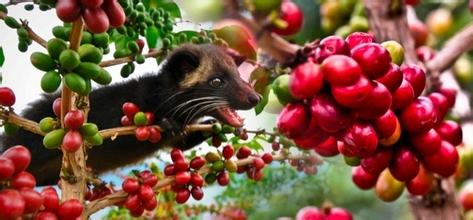
What is the growing environment of coffee beans? What conditions must be met to grow coffee beans?
Coffee is native to tropical Africa. The origin of the small seed species is the tropical plateau of Ethiopia. It is between 900 and 1800 meters above sea level with an average annual temperature of 19. C; the mid-grain species is native to the tropical rain forest of the Congo, with an average annual temperature of 2126 at an altitude of less than 900 meters. C . Their origins are shaded or semi-shaded forests and river valleys, so the formation of coffee requires calm wind, cool and wet.

Is the hybrid between Arabica and Luodou fine coffee? what does the market think of hybrid coffee?
Changing weather patterns, pests, deforestation and rising temperatures are just some of the environmental factors that threaten global coffee production. It is estimated that by 2050, we may lose as much as 40% of our arable land to grow coffee, making today's coffee industry face unprecedented challenges. One possible solution to the above problems is to switch to new hybrids, these products

Species and cultivation techniques of Coffee trees
Arabica bean coffee tree can be divided into two main varieties: Arabica species (Coffea Arabica) and Robusta species (Coffea Robusta/Coffea Canephora). There are also some minor species, such as the Liberian species (Coffea Liberica) and the Alabasta species (Coffea Arabusta), but they are rare on the market.
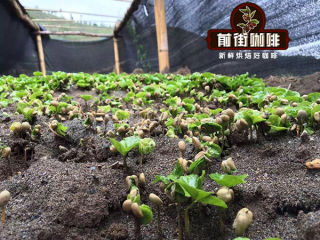
Flavor characteristics of Yunnan small Coffee beans describe the Brand Story of Yunnan Coffee Bean producing area in Qianjie
Professional baristas exchange please follow the coffee workshop (Wechat official account cafe_style) Yunnan coffee is an Arabica species, commonly known as Yunnan small grain coffee. Yunnan's high-quality geographical and climatic conditions provide good conditions for coffee growth. at present, it has formed four major producing areas: Lincang, Baoshan, Dehong and Pu'er. Cloud

Arabica coffee is on the verge of extinction, fit and cherish!
It's hard to imagine what it would be like without this rich, bitter black liquid in a world that consumes 1.5 billion cups of coffee a day. But it is not impossible for such a world without coffee to become a reality. Scientists tell us that half of the arable land needed to produce coffee will disappear by 2050. Arabica, the most consumed coffee variety in the world, will be extinct in the wild by 2080.
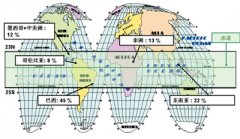
Arabica grows Arabica coffee beans fine coffee beans
If Arabica coffee beans are favored by God, Robusta is the devil's booger, because of the market's love of Arabica coffee. Arabica can become the aristocrat of coffee beans and enjoy the highest honor as the most precious variety, depending on the high standards of its plant's growing environment. Allah

What are the main types of coffee trees? can you put the unopened coffee powder in the refrigerator?
Arabica coffee is more difficult to grow, they like mild days and colder nights, too cold, too hot, too humid climate can be fatal to it. Coffee trees in Arabica need to be planted on sloping slopes at high altitude. they grow luxuriantly in the highlands (600-1800 meters) and require special climatic conditions. the average temperature throughout the year is about 20 degrees Celsius.

Important conditions of Coffee cultivation
There is a noun called "coffee belt". There are more than 60 coffee producing countries in the world, most of which are located in the tropics and subtropics between the Tropic of Cancer (23 °26 'north and south). This coffee growing area is called "coffee belt (Coffee Belt)" or "coffee area (Coffee Zone)".

Coffee Development History of Rwanda Coffee Culture of Rwanda Coffee Origin of Rwanda
The country mainly produces coffee the country opens the international road with the coffee industry in Rwanda coffee production in Rwanda: there are about 33000 hectares of coffee plantations in Rwanda and 500000 people are engaged in the coffee industry. With good natural conditions of high altitude and fertile volcanic soil, the country's fertile soil and suitable climate contribute to plant growth, and coffee trees seem to be driven or driven.